Weekly-ISH | August 10, 2026: Education Freedom, Nuclear Power & USA Manufacturing

Updated: 1 day ago
This week I passed a study of an education tax credit built for the families EFAs weren't designed to reach.
A New Path to School Choice

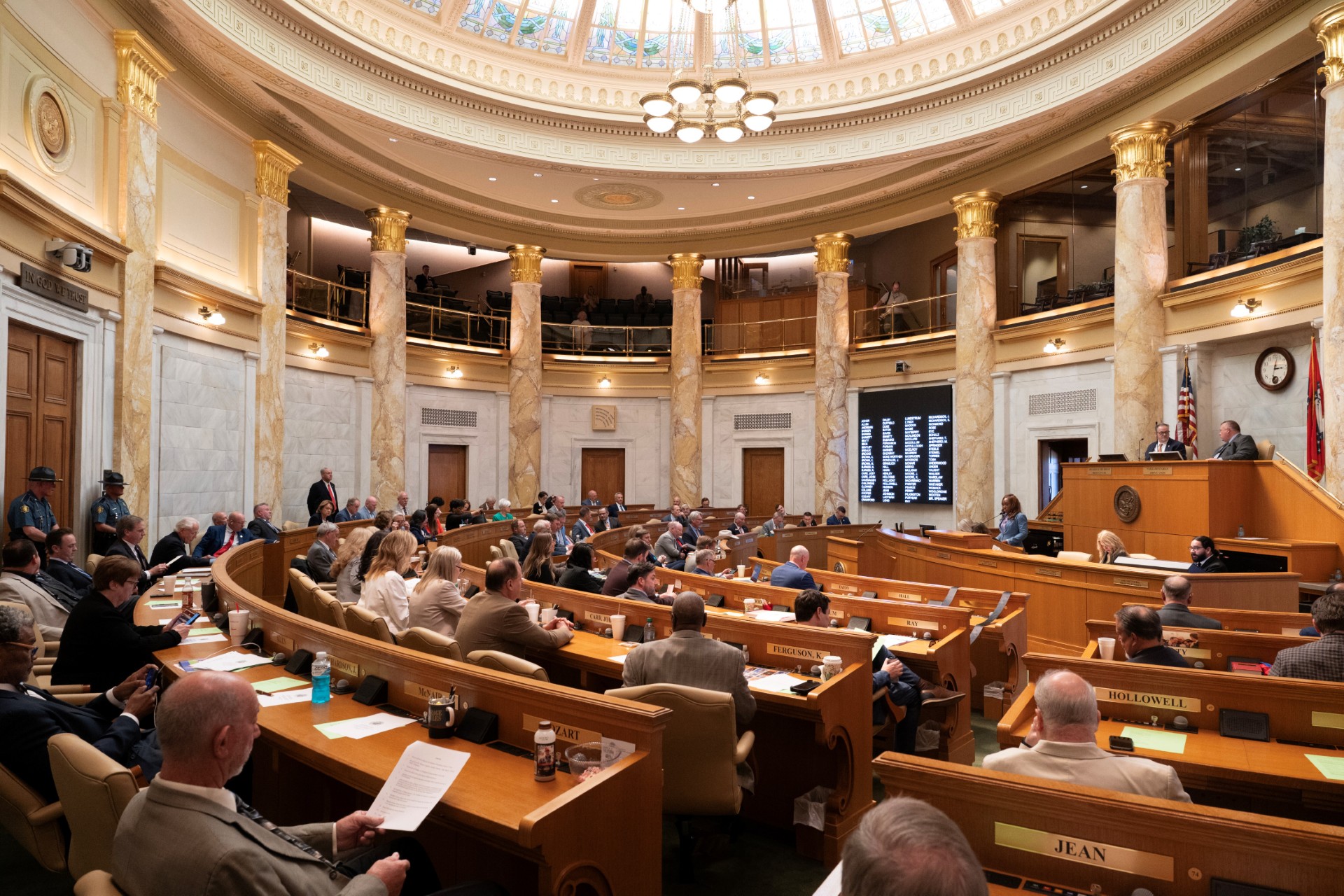
Rep. McKenzie during the House and Senate Education Committees' joint meeting, August 3, 2026. (Arkansas Democrat-Gazette / Thomas Metthe)
On Monday the House and Senate Education Committees met jointly, and I brought forward an interim study proposal that the committee approved: a personal education tax credit for Arkansas families, separate and apart from Educational Freedom Accounts.
The proposal outlines a program that would begin in 2027 and expand to uncapped universal availability by 2029, offering a credit worth up to $3,000 per child for qualified educational expenses: tuition, fees, textbooks, curriculum, tutoring, educational therapies, transportation, and technology. It sits alongside EFAs, not in place of them. Put simply, this would be for anyone interested in school choice who does not want to navigate the EFA program. We have heard from homeschool families who are hesitant to apply for an EFA because it introduces regulation into a space where they previously had none. A tax credit gives them another door.
Here is why I think an education tax credit strengthens the whole system rather than competing with it:
Why an Education Tax Credit Expands Freedom for Families
Makes LEARNS and EFAs more efficient. Arkansas has changed ESA vendors three times in four years. Anything above tuition and fees strains the platform. A tax credit runs independently of any single vendor, so families gain continuity and the EFA program can focus on those who most need funds in advance.
One size does not fit every family. Some families want funds up front through an ESA. Others would rather pay directly and get support through the tax system. Both should be options.
Built for individualized education. Homeschool, microschool, and hybrid families assemble learning from many providers. Those purchases do not look like traditional tuition. A tax credit lets families buy directly and document through the tax process.
A more private pathway. Families pay providers their own way and claim the credit directly, without routing every transaction through a state vendor. Claims stay protected tax information reviewed through DFA's existing processes.
Uses systems we already have. DFA already administers credits, runs audits, and investigates fraud. This builds on that capacity instead of adding another third-party vendor.
Reaches more families per dollar. A credit can be structured at a lower average cost than a full ESA award while still meaningfully helping families, expanding how many people we reach.
Fiscally predictable. A defined value, an annual statewide cap, or both give lawmakers a clear framework for forecasting cost. That predictability complements a program whose costs shift with enrollment.
The study now moves forward. My goal is a well-built proposal ready for the 2027 Regular Session. Arkansas made a promise on school choice. This is about making sure that promise reaches every family, including the ones the current system was never designed to serve.
Where the Adequacy Study Stands
The same joint committee is also deep into the educational adequacy study, the recurring constitutional review that determines whether Arkansas is meeting its obligation to fund a suitable education for every student. This is the process that ultimately shapes the per-pupil funding recommendation the legislature carries into the next session.
The Bureau of Legislative Research has been preparing the underlying report, and we are now in the phase where the committee reviews its findings and works toward a recommendation. Much of Monday's discussion centered on the public school employee health insurance fund, which consultants flagged as facing pressure in the coming years. That is a real issue we will address. But the larger task in front of us is the adequacy recommendation itself, and getting that number right, because it drives school funding statewide. I will keep you posted as the report firms up and the committee moves toward its formal recommendation.
Act 707 and the Case for Arkansas Nuclear
The feasibility study is in. The verdict: technically feasible and advisable.
Rep. Jack Ladyman passed Act 707 of 2025, which directed the state to commission a full nuclear feasibility study. Last week the Joint Committee on Energy received the results, and they are worth paying attention to. The report's conclusion was direct: new nuclear generation in Arkansas is both technically feasible and advisable. The state needs the energy, workable sites exist, federal support is the strongest it has been in decades, and state law needs only modest changes to move forward.

Arkansas Nuclear One in Russellville, one of six candidate regions identified in the feasibility study.
The study screened six candidate regions across the state, including Arkansas Nuclear One in Russellville, sites near Camden, and locations in central Arkansas. The demand case is not speculative. Entergy projects power needs will grow more than 35 percent over the next five years, driven by manufacturing, data centers, and population growth, with long-term demand potentially doubling.
My position on energy is simple. I am a proponent of every source above the line. We need abundance and we need load, and whatever gets us there has my support. Nuclear is a serious part of that answer, and I am glad Arkansas is doing the groundwork now rather than scrambling later.
Made in Rogers: A Tour of PLP
Nearly 500 jobs, and a critical link in America's broadband buildout.

Touring the PLP manufacturing facility near Downtown Rogers.
This week I toured PLP, a long-standing manufacturing facility near Downtown Rogers. It's the kind of place that reminds you where real economic strength comes from. PLP employs nearly 500 people between its front office and its many manufacturing lines, and the work happening on those lines matters well beyond our district.
PLP is a major player in the race to deliver last-mile broadband coverage. The tools and hardware that make broadband access possible across the entire country run off lines right here in Rogers, Arkansas. That is something to be proud of. I appreciate PLP for the vital role it plays in our local economy and in the broader national one, and for building it here at home.
Clips Worth Reading
What the Data Says About Homeschooling's Growth: a look at national homeschooling enrollment trends and the research behind them. Useful context for the tax credit conversation happening here in Arkansas.
Legislative Panel Approves Study of Proposed Education Tax Credit: coverage of the interim study I brought forward this week, and what a $100 million personal education tax credit could mean for Arkansas families.
As Another School Year Approaches, Rural Northwest Arkansas Feels the Squeeze: a look at the pressures facing rural schools and communities in our corner of the state as the new year begins.